

Why Won't My Garage Door Close in Cold Weather? (And What to Check First)
Published
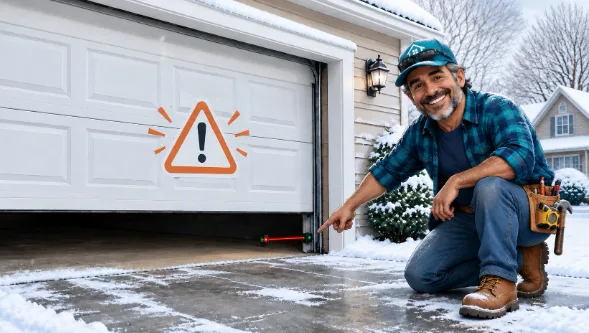
<h1>Why Won't My Garage Door Close in Cold Weather? (And What to Check First)</h1><p><img src="https://cdn.marblism.com/wXPY7ttmhzm.webp" alt="Hometown Hank, the Jackson Hometown Pros mascot, kneeling in the snow beside a white garage door and pointing at its photo-eye safety sensor"></p><p>When temperatures drop, a garage door that worked yesterday may suddenly refuse to close, stop partway, or reverse as it reaches the floor. The most common cold-weather culprits are <strong>blocked or misaligned photo-eye sensors, weak remote or keypad batteries, stiff or thickened lubricant, a frozen bottom seal, and a door travel-limit issue</strong>.</p><p>You can safely check a few things yourself: clear snow and debris, gently clean the sensor lenses, replace wireless-control batteries, and check that the door’s bottom seal isn’t stuck to ice. <strong>Torsion spring, cable, and opener repair work is for a qualified garage door technician. Springs are under high tension and can cause serious injury. Don’t try to adjust or repair them yourself.</strong></p><h2>Start with the simple, safe checks</h2><h3>1. Check the photo-eye sensors</h3><p>Photo-eye sensors sit near the floor on either side of the garage door. Their invisible beam helps detect people or objects in the opening. If the beam is blocked or interrupted, the door may refuse to close or may reverse.</p><p>Snow, dirt, cobwebs, condensation, or a bumped sensor can interfere with the beam. From a safe standing position:</p><ul><li>Clear anything blocking the sensors.</li><li>Gently wipe each lens with a soft, dry cloth.</li><li>Check that the sensors appear to face each other.</li><li>Look at the indicator lights. The exact light pattern depends on the opener model, so check its manual if a light is blinking or off.</li></ul><p><img src="https://cdn.marblism.com/aD1_KqJ01EI.webp" alt="Hometown Hank gently cleaning a garage door photo-eye sensor with a blue cloth inside a garage in winter"></p><p>Don’t bypass, cover, or disconnect the sensors to make the door close. If cleaning and clearing the area doesn’t help, a technician can check the alignment, wiring, or sensors safely. <a href="https://www.dasma.com/safety-tips/">DASMA’s garage door safety guidance</a> recommends following your door and opener manufacturer’s instructions.</p><h3>2. Replace the remote or keypad batteries</h3><p>Cold weather can shorten the life of wireless remote and keypad batteries. If the wall control works but the remote or outdoor keypad doesn’t, try fresh batteries of the type specified in the manufacturer’s instructions. You can also test the remote from closer to the opener.</p><p>If none of the controls operate the door, or the wall control behaves unexpectedly, don’t open the opener housing. Leave opener diagnosis and repair to a qualified technician.</p><p><img src="https://cdn.marblism.com/091VACAhRC4.webp" alt="Hometown Hank replacing the coin-cell battery in an open garage door remote, with a keypad on the wall beside him"></p><h3>3. Look for ice or snow at the threshold</h3><p>Snow, ice, or debris under the door can block the seal or cause it to freeze to the ground. Clear loose snow from the threshold and check whether the bottom seal is stuck. Don’t force a frozen door down with the opener; extra resistance may cause the door to reverse or strain the system.</p><p>If the seal is frozen in place, stop operating the door until it can release without force. Avoid using heat or chemicals unless the door and seal manufacturer says they’re suitable.</p><p><img src="https://cdn.marblism.com/sUOXl6v8z0s.webp" alt="Hometown Hank sweeping snow away from a garage door threshold and checking the bottom seal in winter"></p><h3>4. Consider cold-stiffened lubricant</h3><p>Old or unsuitable lubricant can become less effective in cold weather, adding resistance to moving parts. The right maintenance varies by opener and door model, so consult the owner’s manual before applying anything. Some manufacturers recommend specific products for particular components or drive types.</p><p>Don’t spray lubricant on the photo-eye lenses or coat the tracks unless your manufacturer specifically instructs you to. If the door still moves sluggishly, makes new grinding noises, or appears to bind, stop using it and arrange a professional inspection rather than trying to compensate with more lubricant.</p><p><a href="https://store.geniecompany.com/blogs/genie-blog/before-winter-hits-check-out-these-maintenance-tips">Genie’s winter maintenance guidance</a> recommends following model-specific instructions, keeping the threshold clear of snow and debris, and replacing weak remote or keypad batteries.</p><h2>What if the door still won’t close?</h2><p>Pay attention to what happens when you press the control:</p><ul><li><strong>The door doesn’t move:</strong> Check the remote or keypad batteries and try the wall control. If the opener still doesn’t respond, it may need professional diagnosis.</li><li><strong>The door starts down, then reverses:</strong> Check for a blocked sensor, ice, debris, or resistance at the threshold. If the problem persists, stop repeating the cycle and call a technician.</li><li><strong>The door stops short of the floor or reverses as it touches down:</strong> A close travel-limit setting may be involved. Travel limits vary by opener model, and incorrect adjustments can cause additional problems. Check the manual; if you’re unsure, have a technician inspect it.</li><li><strong>The door looks crooked, feels unusually heavy, or moves roughly:</strong> Stop operating it. These signs can point to a balance, track, spring, or cable problem that needs professional attention.</li></ul><p>A travel-limit issue is different from a safety sensor problem. The limit tells the opener how far the door should travel; the sensors help detect something in the door’s path. Either can affect closing, but repeated trial-and-error adjustments aren’t a safe substitute for finding the underlying cause. Don’t increase the opener’s force setting to push through resistance.</p><h2>When to call a garage door technician</h2><p>Call a qualified garage door technician if you see a broken or stretched spring, a loose or frayed cable, a crooked door, or a door that suddenly feels very heavy. Also get professional help if the door binds, the opener strains or makes unusual noises, or basic safe checks don’t solve the issue.</p><p><strong>Never adjust or remove springs, cables, bottom brackets, or other high-tension parts. Don’t attempt opener repair.</strong> DASMA cautions that spring systems can be dangerous and that worn or frayed cables should be replaced by trained technicians. If the door won’t close securely, keep people and pets away from it and contact a professional.</p><p>Once the door is working again, follow the manufacturer’s instructions for routine safety checks. Genie recommends checking opener safety features and making sure the sensors respond properly. If a safety-reversal test fails, stop using the opener and ask a professional to check it, don’t rely on a door that may not reverse as intended.</p><h2>Help with garage door service in Jackson County</h2><p>If you need help with a garage door in Jackson, Brooklyn, Parma, Spring Arbor, or elsewhere in Jackson County, visit our <a href="https://jacksonhometownpros.com/services/garage-door-installation-repair">garage door installation and repair page</a> to learn about requesting local provider quotes.</p><p>Jackson Hometown Pros is a local, veteran-owned referral service serving Jackson County, Michigan. Homeowners can submit a <a href="https://jacksonhometownpros.com/quote">free quote request</a> and may receive up to three quotes from independent local providers, depending on availability and project fit. Fewer than three quotes may be available, and a match isn’t guaranteed. Independent providers set their own prices and schedules and perform the work.</p><p><strong>SEO title:</strong> Garage Door Won't Close in Cold Weather? | Jackson MI</p><p><strong>Meta description:</strong> Garage door stuck in the cold? Check safe first steps and request free quotes from local providers in Jackson County, Michigan.</p>